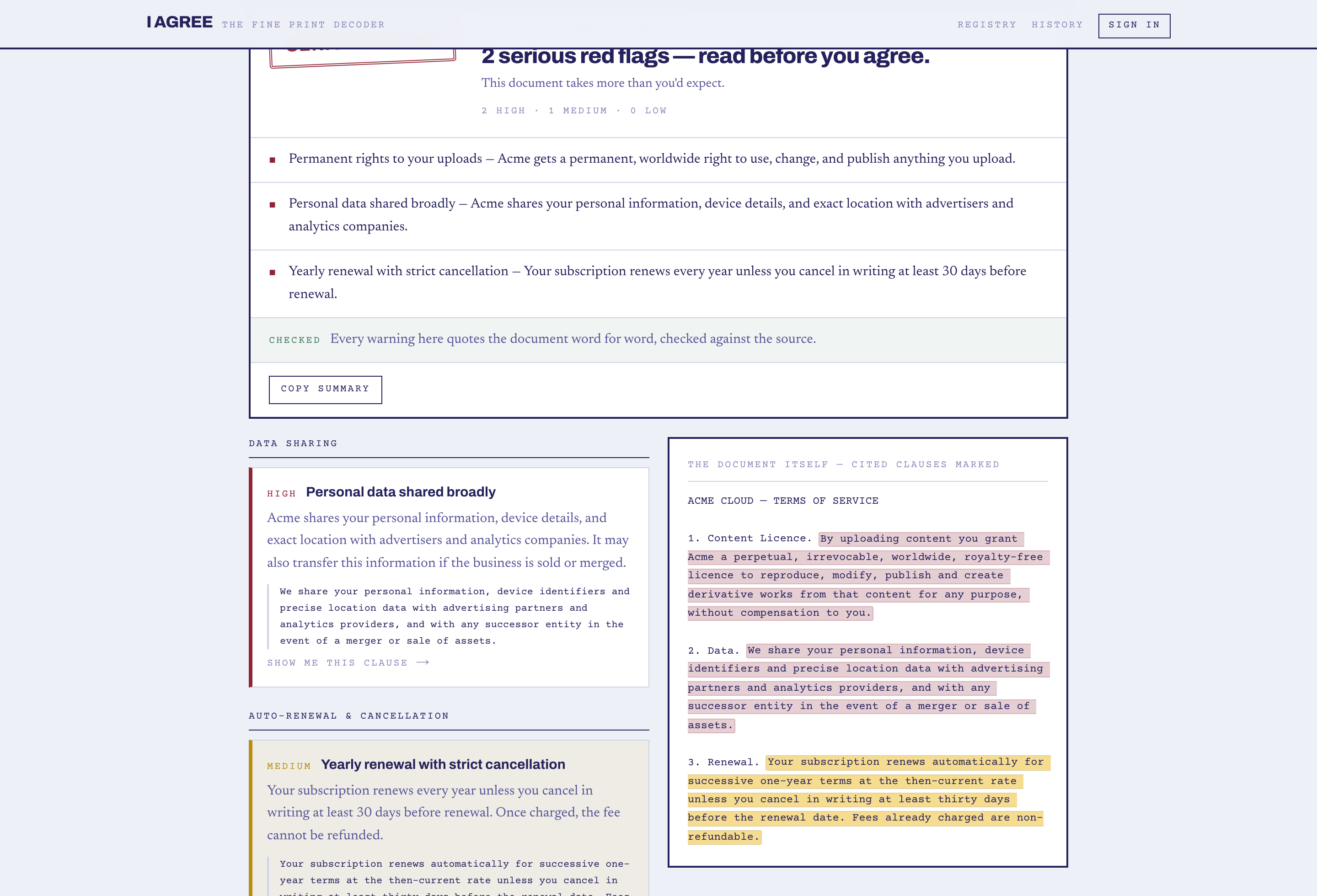
By accessing or using the Service you acknowledge that you have read, understood, and
agree to be bound by these Terms, together with any additional terms, policies,
guidelines, or amendments referenced herein or made available by the Company from time to
time, whether or not notice of such amendment is provided to you. You grant the Company a
perpetual, irrevocable, worldwide, non-exclusive, royalty-free, fully paid-up,
sublicensable and transferable licence to host, store, cache, reproduce, publish, display,
adapt, modify, translate, create derivative works from, and otherwise exploit any content,
data, or material that you submit, post, transmit, or otherwise make available through the
Service, in any medium now known or hereafter devised, for any purpose, without further
notice to or consent from you and without any obligation of attribution or compensation.
The Company may collect, process, retain, and disclose personal information, device
identifiers, approximate and precise location data, usage telemetry, and inferred
characteristics, and may share such information with affiliates, service providers,
advertising partners, analytics providers, and successors in interest, including in
connection with any merger, acquisition, reorganisation, or sale of assets. Your
subscription shall renew automatically for successive terms of equal duration at the
then-current rate unless cancelled in writing not less than thirty days prior to the
commencement of the renewal term; cancellation requests submitted by any other means shall
be deemed ineffective and fees already charged are non-refundable in whole or in part. To
the maximum extent permitted by applicable law, the Company disclaims all warranties,
express or implied, including any implied warranties of merchantability, fitness for a
particular purpose, title, and non-infringement, and shall not be liable for any indirect,
incidental, special, consequential, exemplary, or punitive damages, or for any loss of
profits, revenue, data, goodwill, or anticipated savings, howsoever arising. You agree
that any dispute, claim, or controversy arising out of or relating to these Terms shall be
resolved exclusively by final and binding individual arbitration, and you expressly waive
any right to a trial by jury and any right to participate in a class, collective,
consolidated, or representative action. The Company may suspend, restrict, or terminate
your access to the Service at any time, for any reason or no reason, with or without
notice, and shall have no liability to you in respect of such suspension or termination.
These Terms shall be governed by the laws of the jurisdiction in which the Company is
incorporated, without regard to conflict of law principles.
In the matter of the terms nobody reads
Five things were asked for.
All five are here.
Each one filed as an exhibit you can open and check for yourself — which is the same
thing the product asks of you, and the only claim it makes.
Filed 6 August 2026